

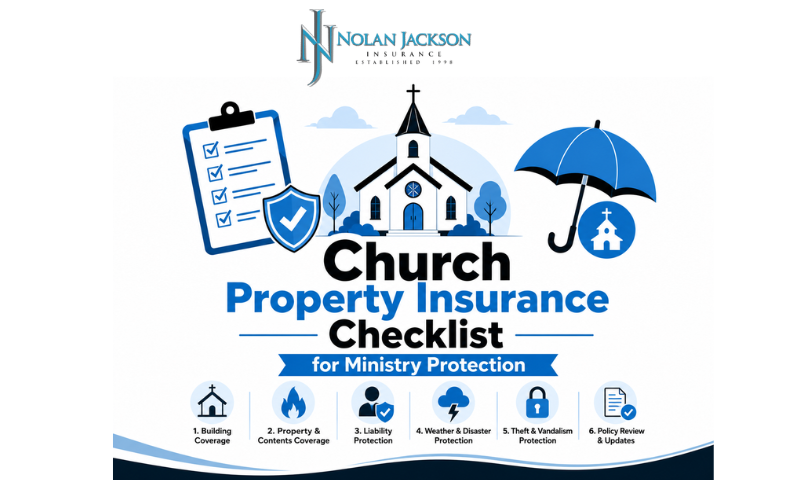
An annual church property insurance checklist helps churches, ministries, schools, and faith-based organizations identify coverage gaps, update property values, reduce financial risks, and ensure they have adequate protection against fire, storms, vandalism, liability claims, and business interruptions. Reviewing your policy before renewal can help prevent costly surprises and keep your ministry operating without disruption.
A comprehensive church property insurance checklist should include reviewing building valuations, contents coverage, liability limits, business interruption protection, vehicle insurance, cybersecurity risks, volunteer activities, and ministry-specific exposures. Annual policy reviews help churches maintain adequate protection, comply with lender requirements, and avoid costly coverage gaps that could threaten ministry operations after a loss.
Why Every Church Should Conduct an Annual Insurance Review
Churches face unique risks that differ from those of traditional businesses. Worship facilities, educational programs, community outreach ministries, daycare operations, mission activities, and volunteer programs create a broad range of exposures that require specialized insurance protection.
Unfortunately, many churches renew their policies year after year without evaluating whether their coverage still matches their current operations.
An annual review provides opportunities to:
- Update property values
- Identify coverage gaps
- Account for new buildings or renovations
- Review liability exposures
- Ensure ministry continuity after disasters
- Potentially reduce insurance costs
- Meet lender and denominational requirements
Whether your congregation has 100 members or several thousand, an annual insurance review is one of the most important financial stewardship practices leadership can perform.
Annual Church Property Insurance Checklist
Use the following Church Property Insurance Checklist during every policy renewal period.
1. Verify Building Replacement Costs
Many churches are underinsured because building values were established years ago and never updated.
Construction costs continue to rise due to:
- Labor shortages
- Material inflation
- Building code changes
- Specialized church architecture
Review:
- Sanctuary replacement costs
- Educational buildings
- Fellowship halls
- Administrative offices
- Storage facilities
- Parsonages
Important Question
If your church were completely destroyed tomorrow, would your policy provide enough coverage to rebuild the property at today’s costs?
2. Review Coverage for Church Contents and Equipment
Church property extends far beyond the building itself.
Many churches own:
- Audio/visual equipment
- Musical instruments
- Sound systems
- Computers and servers
- Streaming equipment
- Office furniture
- Children’s ministry supplies
- School equipment
As technology investments increase, contents coverage should be reviewed annually.
Create an updated inventory that includes:
| Item Category | Review Annually |
| Sound Equipment | Yes |
| Streaming Technology | Yes |
| Computers | Yes |
| Musical Instruments | Yes |
| Furniture | Yes |
| Educational Supplies | Yes |
3. Evaluate Recent Property Improvements
Have you recently completed:
- Sanctuary renovations?
- Roof replacements?
- HVAC upgrades?
- Parking lot improvements?
- Security system installations?
- New building additions?
Property improvements increase replacement values and may require policy adjustments.
Failing to report renovations can result in underinsurance and claim disputes.
4. Confirm Protection Against Natural Disasters
Churches throughout the Southeast face increasing weather-related risks.
Review coverage for:
Wind Damage
Strong storms can damage roofs, steeples, and exterior structures.
Hail Damage
Hail-related claims continue to increase across many states.
Water Damage
Verify protection for:
- Burst pipes
- Roof leaks
- Water intrusion
Flood Risk
Most standard property policies exclude flood damage.
Churches located in flood-prone areas should evaluate separate flood insurance coverage.
5. Review General Liability Limits
Property protection is only one part of a comprehensive insurance strategy.
Churches regularly host:
- Worship services
- Community events
- Vacation Bible School
- Weddings
- Funerals
- Outreach programs
Each activity creates liability exposure.
Review:
- Per-occurrence limits
- Aggregate limits
- Medical payments coverage
- Event liability protection
6. Assess Sexual Misconduct and Abuse Liability Coverage
This is one of the most important areas of modern church risk management.
Leadership should verify:
- Coverage limits
- Reporting requirements
- Employee screening procedures
- Volunteer screening programs
- Background check compliance
Insurance carriers often require documented risk management procedures.
An annual review ensures ongoing compliance while helping protect both ministries and congregants.
7. Evaluate Coverage for Schools and Daycare Programs
Faith-based schools and daycare operations create additional exposures beyond traditional church activities.
Review:
- Student accident coverage
- Playground liability
- Educational facilities
- Staff liability exposures
- Transportation risks
Churches operating educational ministries should ensure these activities are specifically included within their insurance program.
8. Verify Business Interruption Coverage
A major property loss can halt ministry operations for months.
Business interruption coverage helps offset:
- Temporary relocation expenses
- Lost revenue
- Continuing payroll costs
- Operational disruptions
Many church leaders focus solely on building coverage and overlook the financial impact of ministry downtime.
Business interruption protection can be the difference between recovering quickly and experiencing long-term financial hardship.
9. Review Church-Owned Vehicle Coverage
If your organization owns:
- Church vans
- Buses
- Passenger vehicles
- Utility vehicles
Review:
- Liability limits
- Physical damage coverage
- Driver eligibility requirements
- Transportation ministry exposures
Vehicle-related claims often represent significant liability risks for churches.
10. Update Volunteer and Ministry Activity Exposures
Ministries evolve constantly.
Review any new programs such as:
- Food pantries
- Counseling ministries
- Sports programs
- Mission trips
- Community outreach events
- Youth activities
New ministries may create exposures not contemplated when the policy was originally written.
11. Review Cybersecurity and Data Protection Risks
Many churches now maintain:
- Online giving platforms
- Member databases
- Financial records
- Employee information
- School records
Cyber threats continue to increase.
Ask whether your policy includes:
- Cyber liability coverage
- Data breach response
- Ransomware protection
- Recovery expenses
Cyber insurance is rapidly becoming a critical component of church risk management.
12. Confirm Directors and Officers (D&O) Protection
Church leaders make financial and operational decisions that can expose them to lawsuits.
D&O coverage helps protect:
- Pastors
- Board members
- Elders
- Trustees
- Ministry leadership teams
This coverage should be reviewed annually alongside property insurance.
Annual Church Insurance Review Comparison Table
| Coverage Area | Review Frequency | Why It Matters |
| Building Values | Annually | Prevent underinsurance |
| Contents Coverage | Annually | Protect technology and assets |
| Liability Coverage | Annually | Address growing legal risks |
| Sexual Misconduct Liability | Annually | Protect ministry operations |
| Business Interruption | Annually | Maintain continuity after disasters |
| Commercial Auto | Annually | Reduce transportation liability |
| Cyber Liability | Annually | Protect sensitive data |
| D&O Coverage | Annually | Protect church leadership |
Signs Your Church May Need Coverage Updates
Watch for these common triggers:
- Premium increases at renewal
- New building purchases
- Expansion projects
- Launch of a school or daycare
- Significant equipment purchases
- Previous insurance claims
- Increased attendance
- Property appraisals showing higher values
Any of these changes should prompt an immediate review of your Church Property Insurance Checklist.
Partner with a Church Insurance Specialist
Church insurance is highly specialized. A policy designed for a generic nonprofit may overlook critical ministry exposures.
Working with an advisor who understands churches, ministries, schools, and faith-based organizations can help ensure:
- Appropriate property valuations
- Comprehensive liability protection
- Ministry-specific coverage solutions
- Competitive premiums
- Faster claims support
- Long-term risk management guidance
Protect Your Ministry with Nolan Jackson Insurance
At Nolan Jackson Insurance, we specialize in helping churches, ministries, religious nonprofits, schools, and daycare programs secure insurance solutions tailored to their unique needs.
Whether you’re preparing for renewal, evaluating rising premiums, expanding your facilities, or reviewing your annual Church Property Insurance Checklist, our team can help identify coverage gaps and recommend protection designed specifically for faith-based organizations.
Request a church insurance review today and gain confidence that your ministry is protected for the year ahead.
Frequently Asked Questions
What is included in a Church Property Insurance Checklist?
A church property insurance checklist typically includes building valuations, contents coverage, liability protection, business interruption coverage, vehicle insurance, and ministry-specific risks.
How often should a church review its insurance policy?
Churches should conduct a comprehensive insurance review annually, ideally 60 to 90 days before policy renewal.
Why are church replacement cost valuations important?
Accurate replacement cost valuations help ensure sufficient coverage to rebuild church facilities after a total loss.
Does church property insurance cover natural disasters?
Coverage varies by policy, but flood insurance and certain weather-related protections may require separate endorsements or policies.
Should churches carry cyber liability insurance?
Yes. Churches increasingly store sensitive financial and personal information, making cyber liability coverage an important consideration.